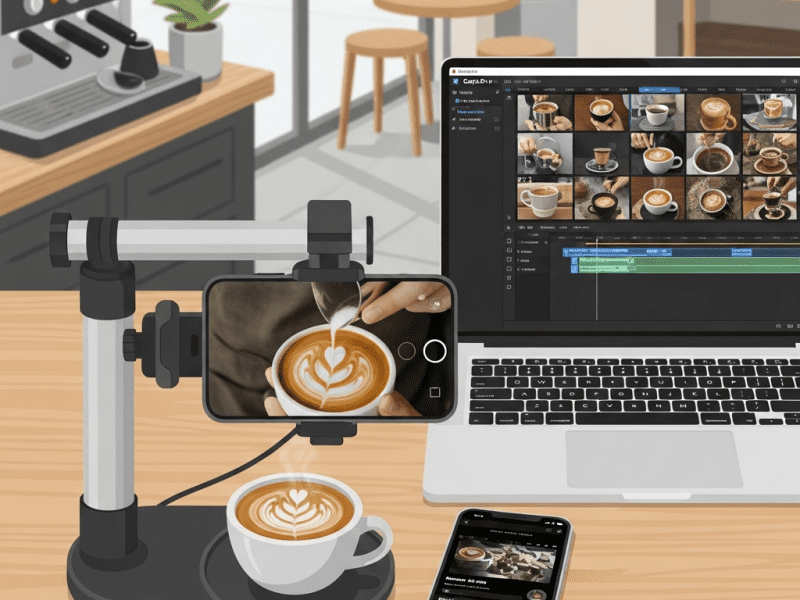
We built a complete short-form content production system for Brew & Basin — producing 80+ Reels, Shorts, and TikToks monthly through a batch filming workflow, growing combined short-form views from 42K to 4.8M monthly, driving 2,400+ monthly website visits from short-form alone, and turning a coffee brand’s daily operations into a scroll-stopping content machine.
Short-Form Video Strategy & Content Pillars, Reels/Shorts/TikTok Production System, Trending Content Adaptation Framework, ASMR & Satisfying Content Pipeline, Educational Short-Form Series, Behind-the-Scenes Content System, Batch Production Workflow, Platform-Specific Optimization, Hashtag & Discovery Strategy, Performance Tracking & Iteration System
Tools & Platforms Used
CapCut Pro, Canva Pro, ChatGPT API (OpenAI), Eleven Labs (voiceover), Instagram (Reels), TikTok, YouTube (Shorts), Pinterest (Idea Pins/Video Pins), Notion (content calendar), Airtable (production pipeline), Later (scheduling), Epidemic Sound (royalty-free music), Artlist (sound effects), iPhone 15 Pro (filming), DJI Osmo Mobile 6 (stabilizer), Lume Cube lighting, Adobe Lightroom (color grading), Google Analytics 4, Google Drive, Slack
Project Year
2025
The Overview
Brew & Basin is a specialty coffee and lifestyle brand based in Portland, Oregon, with three revenue streams — a flagship café, an online store selling single-origin beans, brewing equipment, and branded merchandise, and a subscription box delivering curated coffee experiences monthly. Annual revenue: $2.4M. Their customer base spans coffee enthusiasts aged 24-40 across the US, with growing international audiences in Canada, UK, and Australia through their online store.
Brew & Basin’s products and spaces were inherently visual — latte art that belonged in a gallery, single-origin beans roasted in small batches with visible craft, a café interior designed by a former Kinfolk magazine art director, and baristas who competed nationally. They had every ingredient for short-form video success. They just weren’t making any.
Their Instagram had 28,000 followers built entirely on static photos — beautiful, yes, but invisible in an algorithm that prioritizes video. Their TikTok account existed but had 12 posts from 2023, sporadic and unfocused. YouTube Shorts didn’t exist. Pinterest video was untouched.
Meanwhile, competitors and even generic coffee accounts were racking up millions of views with the exact type of content Brew & Basin could produce better — satisfying latte art pours, ASMR espresso machine sounds, “coffee education in 30 seconds” clips, and behind-the-scenes roastery content. A random account called @morningcoffeecalm had 1.2M followers posting nothing but overhead pour-over videos with lo-fi music. Brew & Basin’s actual baristas were more skilled, their equipment was better, their café was more beautiful — but they weren’t creating content.
We built a complete short-form content production system — from content strategy and format frameworks to batch production workflows, trending content adaptation, platform optimization, and performance tracking — transforming Brew & Basin’s daily café operations into a constant stream of scroll-stopping, follower-growing, revenue-driving short-form video content.
The Challenge
Algorithm Invisibility: Instagram’s algorithm in 2025 distributes Reels to 3-5x more non-followers than static posts. Brew & Basin posted only static images, meaning their content reached existing followers but almost never appeared on Explore or in non-follower feeds. Organic reach had declined 64% year-over-year despite follower count growing.
Content Gap vs. Competitors:
Account
Followers
Monthly Reels/Shorts
Avg Views/Video
Content Style
@morningcoffeecalm
1.2M
60+
380K
ASMR pours, ambient café, lo-fi music
@jameshoffmann
1.8M (YT)
20 Shorts
520K
Coffee education, reviews, science
@onyx.coffee
186K
40+
85K
Roastery BTS, latte art, barista life
@blueBottle
312K
30+
120K
Aesthetic café content, seasonal drinks
@brewandbasin
28K
0-2 (sporadic)
3,200
Static photos only
Zero Short-Form Production Capability: No one on the team knew how to film, edit, or optimize short-form video. No equipment setup, no editing workflow, no trending audio awareness, no hashtag strategy. The baristas and roasters were incredible at their craft but had never filmed it. The marketing manager could write emails and Instagram captions — video was a completely foreign medium.
Platform Absence: Zero TikTok activity (where coffee content regularly goes viral). Zero YouTube Shorts (where educational coffee content thrives). Zero Pinterest video (where “aesthetic coffee” is one of the top-searched categories). 100% dependence on Instagram static posts — the single lowest-reach format on the platform.
No Batch Production System: The few Reels they’d attempted were one-off productions — 90 minutes to film and edit a single 15-second clip. At that rate, producing the 60-80 monthly videos needed for algorithmic relevance would require a full-time videographer they couldn’t afford ($55,000-$70,000/year).
Our Approach & Strategy
Phase 1: Short-Form Content Strategy & Format Framework (Week 1)
Short-Form Content Pillar System (6 Pillars):
Pillar
Purpose
Content Types
% of Mix
Virality Potential
☕ Satisfying Process
Stop-scroll visual satisfaction — the “I can’t stop watching” effect
⭐⭐⭐⭐⭐ Highest — satisfying process videos consistently go viral
🎓 Coffee Education
Build authority, provide value, drive saves and shares
“How to brew better coffee at home,” “What your grind size actually means,” “3 signs your beans are stale,” “The difference between Arabica and Robusta”
20%
⭐⭐⭐⭐ High — educational content gets shared and saved
🏠 Café Vibes & Ambience
Create FOMO, drive visits, build atmosphere brand
Morning opening rituals, golden hour interior shots, rain on windows, seasonal ambience, “a perfect afternoon at Brew & Basin”
TIME: 6-8 hours for full batch (~40 videos) AVERAGE PER VIDEO: 10-12 minutes editing
STEP 1 — IMPORT & ORGANIZE (30 min): → Import all raw clips from filming day to CapCut project → Tag by pillar (Process / Education / People / Vibes / Product / Trend) → Flag hero clips (the best 5-6 that could be standalone hits)
STEP 2 — EDIT PROCESS VIDEOS FIRST (90 min for ~12 videos): → These are simplest: trim start/end, apply color preset, add music from library, export → No text overlay needed for pure process/ASMR videos → Apply "Brew & Basin Warm" color grade preset (custom LUT) → Add audio: original ASMR sound + lo-fi background track at 30% volume
STEP 3 — EDIT EDUCATIONAL VIDEOS (90 min for ~8 videos): → Trim and pace dialogue (remove ums, dead air) → Add text overlay: hook text (first 2 sec), key points, CTA → Typography: Brand font (DM Sans Bold) in cream/white → Add B-roll cutaway between talking-head segments → Background music: subtle, doesn't compete with voice
STEP 4 — EDIT PEOPLE/CULTURE VIDEOS (60 min for ~6 videos): → Casual editing style — jump cuts OK (adds energy) → Add captions (CapCut auto-caption → brand font override) → Background music: upbeat, personality-matching → Add "follow for more" end card
STEP 5 — EDIT AMBIENCE VIDEOS (45 min for ~6 videos): → Smooth transitions (dissolve, not jump cut) → Lo-fi or ambient music (full track, no voiceover) → Color grade: warm, golden, cinematic → Minimal or no text — let the visual speak
STEP 6 — EDIT PRODUCT/MENU VIDEOS (45 min for ~4 videos): → Product reveal pacing — build anticipation → Price/availability text overlay → CTA: "Link in bio" or "Order online" → Brand watermark (small, corner)
STEP 7 — FORMAT FOR PLATFORMS (60 min for all): → Export each video in: • 9:16 (Instagram Reels, TikTok, YouTube Shorts, Pinterest) • 1:1 (Instagram Feed cross-post option) → Add platform-specific elements: • TikTok: trending sound swap (if applicable) • YouTube Shorts: title card optimization • Pinterest: text overlay with searchable description
STEP 8 — QUALITY CHECK & ORGANIZE (30 min): → Watch each video: audio levels, text readability, brand consistency → Upload to Google Drive: organized by pillar → by publish date → Update Airtable pipeline: status → "Ready to Schedule"
TOTAL: 6-8 hours → 40 finished, multi-platform videos COST PER VIDEO: ~$15 (editing time at $75/hr ÷ 5 videos/hr) COMPARE TO: $200-$600 per video from freelance video editor ━━━━━━━━━━━━━━━━━━━━━━━━━━━━━━━━━━━━━━━━━━━━━━━━━━━━━━━━
Cost Per Video Breakdown:
Cost Component
Per Video
Monthly (80 videos)
Filming time (4 hrs × 2 sessions ÷ 80 videos)
$4.50
$360
Editing time (14 hrs × $75/hr ÷ 80 videos)
$13.12
$1,050
Music licensing (Epidemic Sound, $15/month)
$0.19
$15
Tools (CapCut Pro, Canva Pro, Later — prorated)
$0.75
$60
TOTAL PER VIDEO
$18.56
$1,485/month
Traditional equivalent (freelance videographer)
$300-$600/video
$24,000-$48,000/month
Savings
93-97% cost reduction
Phase 3: Trending Content System & Platform Optimization (Week 3)
Trending Content Adaptation Framework:
Trend Monitoring
Method
Frequency
Action
TikTok Trending Sounds
Check TikTok Creative Center + “For You” feed daily
Daily (10 min)
Identify trending sounds that can be adapted to coffee/café context — save to “Trend Bank” in Notion
BATCH FILMING DAY (Bi-weekly, Tuesday): → Film 40 raw clips across all 6 pillars
EDITING DAY (Wednesday-Thursday after filming): → Edit all 40 clips in batch (6-8 hours) → Format for each platform → Upload to Google Drive → update Airtable status
SCHEDULING DAY (Friday): → Load next 2 weeks of content into Later (Instagram) → Schedule TikTok posts (Later or manual — optimal times) → Schedule YouTube Shorts (YouTube Studio) → Schedule Pinterest video pins (Later or Pinterest scheduler) → Preview Instagram grid aesthetic flow → Add captions, hashtags, and first comments
LIVE MANAGEMENT (Daily, 15 min): → Monitor comments and engagement within first hour of posting → Respond to comments (drives algorithm boost) → Check trending sounds/formats — if urgent trend, produce reactive content same-day → Track initial performance signals
WEEKLY REVIEW (Monday, 30 min): → Review last week's performance: views, engagement, saves, shares, profile visits → Identify top performers → note what worked (hook, format, audio, timing) → Identify underperformers → note what didn't work → Adjust this week's scheduled content based on learnings ━━━━━━━━━━━━━━━━━━━━━━━━━━━━━━━━━━━━━━━━━━━━━━━━━━━━━━━━━━
Phase 5: Performance System, Team Training & Handover (Week 5)
3 media features (Portland Monthly, Sprudge, Eater Portland) — from viral videos
—
Brand Partnership Inquiries
1-2/quarter
8-12/month (from TikTok/IG visibility)
⬆ 1,200%
📋 Case Study Summary
Challenge: Brew & Basin — a specialty coffee brand with a flagship Portland café, online store, and subscription box ($2.4M annual revenue) — had zero short-form video production despite having the most visually compelling product category on social media. 28K Instagram followers built entirely on static photos with declining organic reach. Dormant TikTok with 12 posts. No YouTube Shorts or Pinterest video. Competitors and generic coffee accounts were generating millions of views with content Brew & Basin could produce better but simply wasn’t producing. No filming capability, no editing workflow, no trending awareness, no platform strategy.
Solution: We built a complete short-form content production system — a 6-pillar content strategy with 18 repeatable video formats; a 4-platform distribution strategy (Reels, TikTok, Shorts, Pinterest); a bi-weekly batch filming workflow producing 40 clips per 4-hour session using a $765 equipment kit; a batch editing workflow processing 40 videos in 6-8 hours at $18.56/video; a trending content adaptation framework with daily monitoring; a 7-type hook strategy library; cross-platform distribution rules; a performance tracking system with 9 metrics and 7 analysis types; team training across 6 modules (11+ hours); and complete handover documentation.
Result: Monthly short-form production went from 0 to 80+ videos. Combined monthly views grew from 42K to 4.8M. Instagram followers grew 164% to 74K. TikTok grew from 840 to 68K followers. YouTube Shorts subscribers reached 14.6K. Reels engagement rate hit 6.8% (vs. 1.4% for static posts). Website visits from short-form reached 2,400/month. Online store social-attributed revenue grew 576% to $28.4K/month. Three videos exceeded 1M views. Production cost: $18.56 per video (95% cheaper than freelance). The café, the beans, the baristas, the latte art — all that existed before. We just pointed a camera at it.
Your Best Content Is Already Happening. You’re Just Not Filming It.
We build short-form content production systems that turn your daily operations into a stream of scroll-stopping Reels, TikToks, and Shorts — with batch filming workflows, platform-specific strategies, and performance tracking that transform your social media presence at a fraction of traditional production costs.
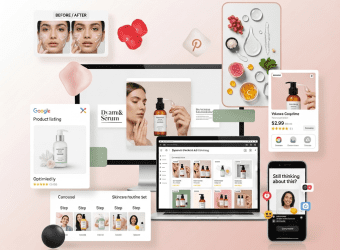
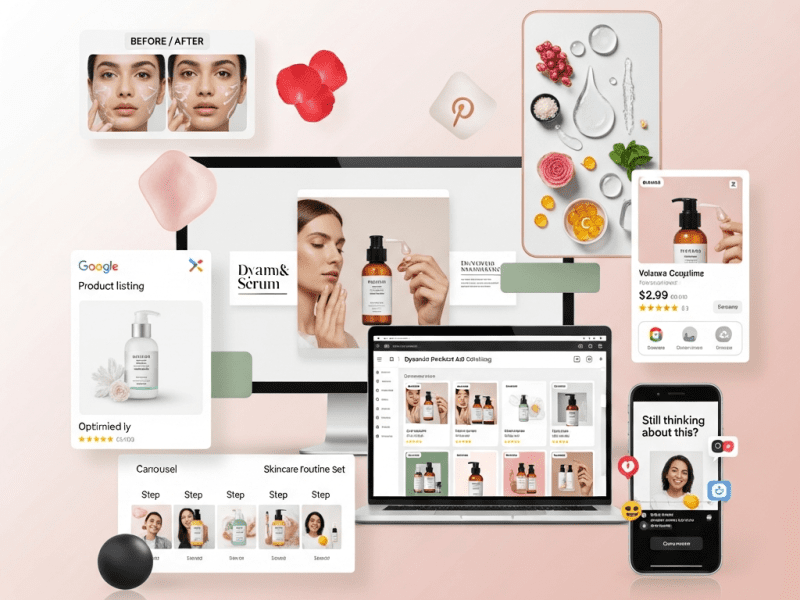
We built a complete product and e-commerce ad creative system for LunaGlow Beauty — producing 160+ conversion-optimized ad creatives across Meta, TikTok, Pinterest, and Google Shopping, increasing ROAS from 2.1x to 7.4x, lifting product page conversion by 68%, and transforming generic product photos into scroll-stopping, purchase-driving visual commerce.
E-Commerce Ad Creative Strategy, Product Photography Art Direction, Lifestyle & Contextual Ad Design, Catalog & Dynamic Product Ad (DPA) Creative System, Collection & Bundle Ad Frameworks, Promotional & Sale Ad Templates, User-Generated Content (UGC) Ad Integration, Platform-Specific Ad Optimization, Shoppable Content System, Creative Performance Testing Framework
Tools & Platforms Used
Adobe Photoshop, Adobe Lightroom, Figma, Canva Pro, CapCut Pro, Midjourney (lifestyle scene generation), Runway ML (product motion), ChatGPT API (OpenAI) (ad copy), Meta Ads Manager, TikTok Ads Manager, Pinterest Ads Manager, Google Merchant Center, Shopify (product feed), Google Tag Manager, Triple Whale (attribution), Airtable (creative tracking), Notion, Google Drive, Slack
Project Year
2025
The Overview
LunaGlow Beauty is a global D2C skincare brand selling direct from their Shopify store to customers across the US, UK, Canada, and Australia. Their product range includes 42 SKUs — vitamin C serums, retinol creams, hyaluronic acid moisturizers, niacinamide toners, and curated skincare sets — priced between $28 and $89. Average order value: $64. Monthly revenue: $380K. Core audience: women aged 24-38 who research skincare ingredients, read reviews, and want clinical-grade results without dermatologist-grade prices.
Their products were genuinely excellent — 4.6-star average across 8,400+ reviews, a viral retinol cream that had been featured in Allure and Byrdie, and a loyal community of skincare enthusiasts who swore by their vitamin C serum. Product quality was never the problem.
Ad creative was the problem.
LunaGlow’s entire ad library consisted of product photos on white backgrounds with “Shop Now” overlaid in Arial. Every. Single. Ad. No lifestyle context. No before/after. No texture shots. No “how it fits into your routine.” No dynamic product ads from their catalog. No seasonal creative. No bundle-specific ads. No UGC integration. Just white-background product shots recycled across every platform, every audience, every funnel stage.
In the beauty e-commerce space — where brands like Glossier, The Ordinary, and Drunk Elephant invest millions in creating visually stunning, emotionally compelling product advertising — LunaGlow’s ads were invisible. They were spending $120K/month on paid social with a 2.1x ROAS. Profitable only on paper — after product costs, shipping, returns, and overheads, their ad channel was barely breaking even.
We built a complete product and e-commerce ad creative system — from product photography art direction and lifestyle ad design to dynamic catalog ads, collection frameworks, promotional templates, UGC integration, and platform-specific optimization — transforming LunaGlow’s product advertising from generic to irresistible.
The Challenge
One Creative Type for Every Purpose:
Where the Ad Appeared
What the Ad Looked Like
What It Should Have Looked Like
Cold audience (never heard of LunaGlow)
White-background product shot + “Shop Now”
Lifestyle scene showing morning routine, aspirational, brand-storytelling, curiosity-driven
Warm audience (visited site, browsed)
Same white-background shot
Dynamic product ad showing the exact product they viewed, with reviews and social proof
Hot audience (added to cart, abandoned)
Same white-background shot
Urgency-driven creative: “Still in your cart” + product image + offer + scarcity signal
Existing customer (purchased before)
Same white-background shot
Cross-sell creative: “Complete your routine” — complementary products based on purchase
TikTok
Reformatted Instagram ad (cropped, looks out of place)
Native TikTok-style: UGC, trending format, authentic, phone-filmed feel
Pinterest
Same Instagram ad auto-posted
Tall pin with lifestyle imagery, ingredient callouts, “Pin for Later” energy
Google Shopping
Basic product photo, no optimization
Lifestyle + white background hybrid, enhanced titles, price-competitive display
Ad Performance Crisis:
Metric
LunaGlow (Before)
Beauty E-Com Benchmark
Gap
Blended ROAS
2.1x
4.0x–6.0x
48–65% below
CTR (Meta)
0.9%
1.8%–2.8%
50–68% below
CPC (Meta)
$2.40
$0.80–$1.40
71–200% above
Product Page Conversion Rate
2.2%
3.5%–5.0%
37–56% below
Ad Creative Refresh Rate
Once per quarter
Weekly–Monthly
Creative fatigue destroying performance
Video Ads in Mix
0%
60–70% of top performers
Missing the highest-performing format entirely
No Product Photography System: Product photos were taken during the initial product launch — one shoot, white background, front angle only. No ingredient close-ups, no texture shots, no “in-hand” scale photos, no application sequences, no before/after contexts, no flatlay styling, no seasonal variations. The same 42 product photos had been used for 18 months.
Zero Platform Adaptation: The same 1:1 square image was used on Meta Feed, Meta Stories, Reels, TikTok, Pinterest, and Google Shopping. No format optimization. No platform-native creative. Stories and Reels showed cropped product images with black bars. Pinterest showed square images in a vertical-first platform. TikTok showed polished brand content in an authenticity-first environment.
3-4 shot sequence: dispense → apply → blend → glow. Shows the ritual, not just the product. On model’s face/hand with great skin lighting.
MOFU video ads, carousel, Stories sequence, “routine” content
4
Before/After
Same model, same lighting, same angle — before (bare skin) and after (using product). Subtle, realistic, compliant with ad policies.
BOFU high-conversion, social proof, testimonial base
2
Flatlay / Collection
Multiple products arranged artistically — by routine step, by skin concern, or as a curated set. Brand color integration through props.
Collection ads, bundle promotions, gift guide creative, Pinterest
2
Ingredient Spotlight
Raw ingredients (vitamin C oranges, retinol capsules, hyaluronic acid gel texture, niacinamide powder) alongside the product. Science-meets-nature aesthetic.
Full skincare routine featuring 3-4 LunaGlow products — step-by-step morning or evening ritual
Model shoot, bathroom/vanity setting
1 per collection (not per product)
UGC-Style Review
15-30 sec
Authentic-feeling review — phone-filmed, casual, genuine reaction to product
AI-generated (HeyGen/D-ID) or real UGC
2
Phase 2: Ad Creative Design System — By Type (Week 2-3)
Creative Type 1 — Dynamic Product Ads (DPA) Catalog System:
DPA Element
Specification
Catalog Feed
Shopify → Meta Commerce Manager + Pinterest Catalog + Google Merchant Center — all 42 products synced with: title (SEO-optimized), description, price, sale price, product URL, image URLs (hero + lifestyle), availability, category, skin concern tags
DPA Template Design (4 Templates)
Template A: Clean white with brand frame — logo top-left, price bottom-right, “Free Shipping $50+” badge. Template B: Lifestyle background with product overlay — aspirational context. Template C: Review overlay — product image + star rating + review snippet + “Shop Now.” Template D: Ingredient highlight — product + key ingredient callout + benefit text
DPA Retargeting Rules
Viewed product (no ATC): Show viewed product + 3 similar products (Template A or B). ATC abandoner: Show carted product with urgency (“Still in your cart — sells out fast”) (Template C). Purchased: Show complementary products — “Complete your routine” (Template D).
Catalog Segmentation
Product sets: By skin concern (Acne, Aging, Hydration, Brightening, Sensitive), By routine step (Cleanse, Treat, Moisturize, Protect), By price tier (<$35, $35-$60, $60+), By collection (Best Sellers, New Arrivals, Value Sets), By season (Summer SPF, Winter Hydration)
Creative Type 2 — Collection & Bundle Ads:
Collection Ad Type
Format
Design Approach
Example
“Complete Routine” Sets
Carousel (5 slides: Cover → Step 1 → Step 2 → Step 3 → “Save 20% as a set” CTA)
Each slide shows one product in the routine step context + benefit text. Final slide shows complete set + savings.
“The Anti-Aging Evening Ritual” — Retinol Cleanser → Vitamin C Serum → Peptide Moisturizer → Eye Cream
“Shop by Concern” Collections
Carousel (Cover → 4 products → CTA) or Collection Ad (hero + product grid)
Problem-first approach — “Dealing with dark spots?” → curated product selection that solves it
“Your Brightening Edit” — Vitamin C Serum + Niacinamide Toner + AHA Exfoliant + SPF Moisturizer
Gift Sets
Single image + Carousel
Gift-box styled flatlay with ribbon/wrapping context. “The perfect gift for the skincare obsessed.” Holiday-specific styling per season.
Model post-workout or outdoor — SPF application, fresh-faced, natural beauty in natural light.
“SPF that moves with you. From yoga mat to coffee shop.”
TikTok, Instagram Reels, Meta Feed
Ingredient Beauty
Close-up: oranges, vitamin C powder, retinol molecules, hyaluronic acid gel texture — beautiful, almost food-photography level ingredient styling next to product.
“Vitamin C from Kakadu plum, not a lab. 3x more potent than synthetic alternatives.”
Pinterest (2:3), Instagram Carousel, YouTube
Before/After Transformation
Split screen or slider — same person, same lighting, genuine visible improvement. Subtle, realistic, policy-compliant.
“28 days. Same skin. Different glow. No filter, no photoshop — just LunaGlow.”
Meta Feed (1:1), TikTok, Retargeting
Creative Type 4 — UGC & Social Proof Ads:
UGC Ad Type
Source
Design Treatment
Performance Note
Raw Customer Review Video
Real customer video testimonials (collected via post-purchase email)
Must feel native to TikTok — not repurposed Instagram content. Trending sounds. Auto-captions. Phone-filmed aesthetic.
Pinterest
2:3 (vertical tall pin)
Lifestyle, ingredient beauty, routine guides, “Pin for Later” energy
Rich pins with product data. Lifestyle imagery > product-on-white. Keywords in pin description (Pinterest is a search engine). Long shelf life — pins perform for months.
Test types, budget rules, duration, decision criteria, scaling triggers
Performance Dashboard
Airtable creative tracker + Google Sheets analysis templates
Template Library Access
Canva Pro team templates, Figma components, CapCut presets — all organized and documented
Seasonal Campaign Calendar
Pre-built creative briefs and templates for each seasonal campaign (12 months)
Asset Library (Google Drive)
All 1,120+ creative assets organized: by product → by type → by platform
Key Features Delivered
Feature
Description
E-Commerce Ad Creative Matrix
Funnel-stage × format × platform framework ensuring every ad serves a strategic purpose — from awareness to post-purchase cross-sell
18-Shot Product Photography System
8 photography types per product — hero, lifestyle, in-hand, texture, application sequence, before/after, flatlay, ingredient — creating a comprehensive visual library of 756 photos
5-Type Product Video System
Product reveals, application demos, ingredient stories, routine integrations, and UGC-style reviews — 84 videos plus platform adaptations
Dynamic Product Ad (DPA) System
4 custom catalog ad templates applied across 42 products with smart retargeting rules — viewed, carted, purchased segments each see different creative treatments
Collection & Bundle Ad Framework
4 collection ad types (routine sets, concern-based, gift sets, build-your-own) driving higher AOV through curated product groupings
5-Theme Lifestyle Ad System
Morning routine, self-care, active/outdoor, ingredient beauty, and before/after — each with visual and copy direction for aspirational product positioning
UGC & Social Proof Ad Integration
5 UGC ad types from raw video reviews to expert endorsements — leveraging authentic content for highest-converting ad creatives
6-Platform Optimization
Meta, Instagram, TikTok, Pinterest, Google Shopping, and YouTube — each with platform-native creative strategy, format specs, and unique optimization
Shoppable Content System
Instagram Shopping, Pinterest Shopping Pins, TikTok Shop, Meta Shops, and Google Shopping integration — reducing purchase friction across every platform
Creative Adaptation Matrix
Each hero concept produces 3-5 platform versions — maximizing production ROI and ensuring native feel on every platform
A/B Testing Framework
7 test types (image style, video vs. static, copy angle, DPA template, offer, format, platform) with clear methodology and decision rules
1,120+ Creative Assets
Complete library: 756 photos, 84 videos, DPA templates, collection ads, lifestyle ads, UGC ads, promotional templates, and platform adaptations
Seasonal Campaign Kit System
4 pre-built seasonal creative kits with templates, briefs, and photography direction — ready to activate each quarter
Challenge: LunaGlow Beauty — a global D2C skincare brand with 42 SKUs, $380K monthly revenue, and 4.6-star reviews — was running $120K/month in ads with only 2.1x ROAS using the same 42 white-background product photos for every ad, every platform, every funnel stage, for 18 months. Zero video ads, zero DPA, zero Pinterest or TikTok presence, no lifestyle imagery, no UGC integration, no collection/bundle ads, and no seasonal creative. In a category where Glossier and The Ordinary set extraordinary creative standards, LunaGlow’s ads were invisible and forgettable.
Solution: We built a complete product and e-commerce ad creative system — an 18-shot product photography system producing 756 photos; 84 product videos; a DPA catalog system with 4 custom templates and smart retargeting; collection and bundle ad frameworks; 5-theme lifestyle ad system; UGC and social proof ad integration; 6-platform optimization (Meta, TikTok, Pinterest, Google Shopping, YouTube); shoppable content setup across all platforms; a creative adaptation matrix turning each concept into 3-5 platform versions; a 7-type A/B testing framework; and a complete library of 1,120+ creative assets with seasonal campaign kits and templates for ongoing production.
Result: ROAS jumped from 2.1x to 7.4x. Monthly ad revenue grew 429% ($252K → $1.33M). CTR increased 211%. CPC dropped 70%. Product page conversion grew 68%. AOV increased 34% through bundle ads. DPA retargeting alone achieved 12.6x ROAS, recovering 16.4% of cart abandoners. UGC ads outperformed brand ads by 58% on ROAS. Google Shopping added $124K/month. Pinterest added $68K. TikTok added $48K. The creative library grew from 42 stale photos to 1,120+ assets with performance data on every single one.
Your Products Deserve Ads as Good as They Are
We build product and e-commerce ad creative systems that transform how your products are seen — with photography, video, DPA catalogs, platform-native creative, and testing frameworks that turn browsers into buyers across every platform.
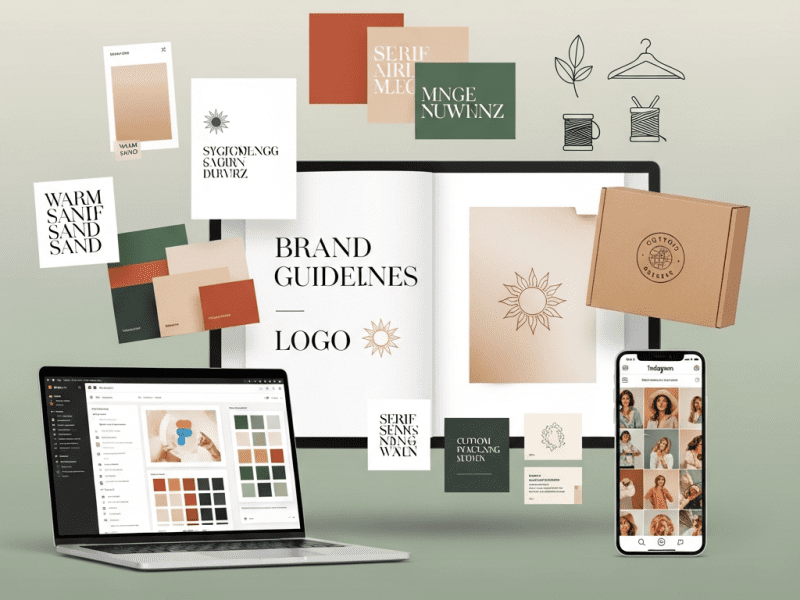
We designed a complete brand and graphic design system for Solara Collective — building a distinctive visual identity from logo to packaging to digital templates, increasing brand recognition by 340%, reducing design production time by 78%, and creating a design language so cohesive that every touchpoint feels unmistakably Solara.
Solara Collective is an online marketplace connecting conscious consumers with 60+ independent sustainable fashion brands across North America, Europe, and Australia. Their curation is exceptional — every brand on the platform meets strict sustainability criteria: organic/recycled materials, fair labor certification, carbon-neutral shipping, and transparent supply chains. Products range from $45 organic cotton basics to $380 recycled ocean-plastic outerwear.
The platform had strong product-market fit — 12,000+ active customers, $1.8M annual GMV, 4.7-star average reviews, and a loyal community of sustainability advocates. But their brand identity was a disaster.
Solara had been bootstrapped by two co-founders — a supply chain expert and a software developer — neither with any design background. Their logo was a free Canva template with a generic leaf icon. Their color palette was “whatever looked okay” — sometimes forest green, sometimes teal, sometimes lime. Their typography changed with every new hire’s personal preference. Product photography guidelines didn’t exist — each brand partner uploaded images in wildly different styles, making the marketplace look like a flea market, not a curated boutique.
The brand felt cheap. And in sustainable fashion — where the entire value proposition is “pay more for better” — looking cheap is fatal. Competitors like Reformation, Everlane, and The Good Trade had built aspirational brand identities that made sustainability feel luxurious, modern, and desirable. Solara made sustainability feel like a sacrifice.
We designed a complete brand and graphic design system — from strategic brand positioning and visual identity to logo suite, typography, color architecture, collateral design, social media brand kits, packaging design, digital ad templates, and a comprehensive brand guidelines document — giving Solara a visual identity that matches the premium quality of what they sell.
The Challenge
No Visual Identity System: No documented brand guidelines, no consistent color palette, no typography hierarchy, no logo usage rules, no photography direction, no graphic design language. Every design decision was ad-hoc, made by whoever was creating the asset that day.
Brand Perception Gap:
Element
Customer Perception (Survey, n=400)
Desired Perception
Gap
“Premium/High-Quality”
22% agreed
80%+
-58 points
“Trustworthy”
61% agreed
90%+
-29 points
“Modern/Stylish”
18% agreed
85%+
-67 points
“Worth the Premium Price”
31% agreed
75%+
-44 points
“Would Recommend Based on Brand Impression”
28%
80%+
-52 points
Design Chaos Across Touchpoints:
Touchpoint
Current State
Logo
Free Canva template — generic leaf icon + basic sans-serif. No logomark, no variations, no responsive versions
Website
Mismatched colors, inconsistent product card styling, no visual hierarchy, stock photography that looks like every other “green” brand
Social Media
Each post designed from scratch — different colors, fonts, layouts. Instagram grid looks like 10 different brands posted on one account
Email Marketing
Plain text emails with no branded header, footer, or design system. Occasional Canva graphics with random fonts
Packaging
Generic brown mailer boxes with a printed label. No branded tape, tissue paper, inserts, or unboxing experience
Advertising
Low-quality Canva ads with stock imagery, clip art, and inconsistent messaging. CTR 40% below industry average
Partner Materials
No brand assets provided to 60+ partner brands — resulting in wildly inconsistent product photography, descriptions, and presentation
Design Production Inefficiency: Without templates, brand assets, or guidelines, every piece of content was designed from scratch. A single Instagram post took 45-60 minutes. An email newsletter took 3+ hours. Ad creatives required hiring a freelancer for $200-$400 per set. Total estimated cost of design inefficiency: $4,800/month in wasted time and freelancer fees.
Our Approach & Strategy
Phase 1: Brand Strategy & Positioning (Week 1)
Brand Positioning Framework:
Element
Definition
Target Audience
Conscious consumers aged 26-42, urban professionals, household income $75K+, who want sustainable fashion that looks as good as conventional luxury — without compromise on style, quality, or aesthetics
Brand Archetype
The Sage × The Creator — wise curation meets beautiful expression. Solara doesn’t just sell sustainable fashion; Solara curates the most beautifully designed sustainable pieces from around the world
Competitive Position
The curated destination for sustainable fashion that feels luxurious — not the “eco-store that looks eco,” but the “fashion store that happens to be entirely sustainable”
Brand Essence
“Conscious Luxury, Beautifully Curated”
Brand Promise
Every piece on Solara is sustainability-verified, designer-quality, and curated for people who refuse to choose between looking good and doing good
Value Proposition
One destination, 60+ vetted sustainable brands, zero compromise. Premium fashion that’s kind to the planet — without looking like it’s trying to be.
Tagline
“Wear Tomorrow.”
Brand Personality Spectrum:
Attribute
Description
Expression
Curated
Selective, intentional, quality-over-quantity
Minimal design, generous white space, fewer elements done beautifully
Warm
Approachable, human, inviting — not cold minimalism
Warm neutrals over stark white, organic textures, imperfect natural elements
Confident
Knows its value, states it plainly, doesn’t over-explain
Bold typography, decisive color choices, clean layouts without visual clutter
Modern
Contemporary design sensibility, forward-looking, not trendy but timeless
Connected to earth, materials, craftsmanship, real people
Natural textures, raw materials as design elements, artisan/maker stories, tactile quality
Phase 2: Visual Identity System Design (Week 2)
Logo Suite (7 Variations):
Logo Version
Use Case
Design Description
Primary Logo (Horizontal)
Website header, email header, large-format print
Wordmark “SOLARA” in custom-modified Cormorant Garamond (refined serif) with custom ligature on “LA” + Collective in DM Sans (small caps, letter-spaced) beneath. Accompanied by a geometric sun/horizon logomark to the left
Primary Logo (Stacked)
Social media profiles, square formats, packaging
“SOLARA” stacked above “COLLECTIVE” with logomark centered above
All Google Fonts — free, fast-loading, available across all platforms
Photography & Visual Direction:
Photography Type
Direction
Mood
Technical Specs
Product (Hero)
Natural light, warm tones, linen/wooden surface, minimal props. Product is the star — nothing competing. Soft shadows, not flat.
Tactile, premium, artisanal
Color-corrected to brand warmth, shallow DOF on detail shots
Product (Lifestyle)
Model wearing product in aspirational but achievable settings — morning coffee, farmer’s market, city walk, studio apartment. Natural, unstaged feeling.
Aspirational but relatable — “this could be my life”
Warm natural light, candid-feeling (not stiff catalog pose), diverse models
Flat Lay
Curated product arrangements on brand-palette surfaces (sand linen, marble, raw wood). 2-4 complementary items styled together.
Curated, intentional, “editor’s pick”
Overhead angle, generous negative space, brand color elements integrated
Behind-the-Scenes
Maker/artisan at work, fabric close-ups, raw materials, workshop environments, hands creating
Custom kraft tape with repeating Solara logomark pattern in Rooted Charcoal
First brand touchpoint — recognizable from outside
Tissue Paper
Custom Sand-colored tissue with subtle topographic line pattern printed in Cream White (tone-on-tone)
Unwrapping feels intentional, curated
Brand Card
4×6″ card — front: “Thank you for wearing tomorrow” in Cormorant. Back: Product’s sustainability story (how it was made, materials, artisan info), QR code to full story
Storytelling continues post-purchase — connects purchase to purpose
Care Guide
Folded mini-guide: garment care instructions designed on-brand — botanical illustrations, brand typography, “Extend the life of this piece” messaging
Sustainability in action — teaches customers to care for products properly
Return Mailer
Pre-printed return label with Solara branding, easy-fold box design that doubles as return packaging
Branded even in returns — no experience gap
Sticker
Die-cut Solara logomark sticker (50mm) in matte finish — for laptops, water bottles, etc.
Free brand ambassador tool — customers display the brand
Digital Advertising Template Library (30 Templates):
Required assets: Logo (SVG + PNG), Hero image (2400x800px), Brand story (200 words), Sustainability certifications, Founder photo + bio
Uniform brand pages across marketplace
Co-Branding Rules
Partner logo never larger than Solara logo. Partner branding uses their colors within Solara’s layout framework. Product pages follow Solara’s design system, not partner’s.
Marketplace brand coherence — Solara is the destination, partners are the collection
Website Design System (Figma Component Library):
Component Category
Components
Design Details
Navigation
Header (desktop + mobile), mega menu, search bar, cart icon, account menu
Sand background, Charcoal text, Terracotta hover accent, sticky on scroll
Simplified guidelines for 60+ marketplace brand partners
Key Features Delivered
Feature
Description
Brand Positioning Framework
From archetype to tagline (“Wear Tomorrow.”) — strategic foundation ensuring every design decision serves the brand’s competitive position
7-Version Logo Suite
Horizontal, stacked, logomark, monochrome (black + white), wordmark, and responsive — covering every use case from billboard to favicon
10-Color Brand Architecture
Primary, secondary, utility, and semantic colors with defined ratios (60/25/15), accessibility compliance, and emotional reasoning for every color choice
5-Typeface Typography System
Display, sub-headline, body, accent, and data typefaces with full hierarchy scale, pairing rules, and platform-specific guidance — all Google Fonts for universal availability
5-Category Photography Direction
Product hero, lifestyle, flat lay, behind-the-scenes, and editorial — each with mood, technical specs, and example guidance
Complete Graphic Design Language
Shapes, patterns, iconography (32 custom icons), illustration style, dividers, and photography overlays — a toolkit for infinite on-brand design
65 Social Media Templates
9 template categories covering product, editorial, mission, educational, UGC, campaign, quote, BTS, and highlight covers — brand-locked in Canva Pro
12 Email Templates
Welcome, newsletter, product launch, sale, abandoned cart, transactional, and review — modular, responsive, brand-consistent
Packaging & Unboxing System
Custom mailer, branded tape, tissue paper, brand card, care guide, return mailer, and sticker — transforming delivery into brand experience
30 Ad Templates
8 ad types across all major formats — product, collection, lifestyle, social proof, comparison, retargeting, sale, and video thumbnails
72-Page Brand Guidelines
Comprehensive brand book covering strategy, logo, color, typography, photography, graphics, social, packaging, ads, email, and voice
Figma Design System
Complete component library with auto-layout, variants, and styles — enabling designers to create new on-brand assets without referencing the brand book
Brand Partner Guidelines
Simplified visual standards for 60+ marketplace brands — ensuring consistent product photography, descriptions, and brand profiles across the platform
Challenge: Solara Collective — an online sustainable fashion marketplace with 60+ brand partners, $1.8M annual GMV, and 4.7-star reviews — had zero visual identity system. A free Canva logo, inconsistent colors, random typography, amateur social media graphics, plain-text emails, generic packaging, and wildly inconsistent product photography from brand partners. Brand perception surveys showed only 22% of customers perceived Solara as “premium” and 18% as “modern” — fatal positioning gaps for a marketplace charging premium sustainable fashion prices. Competitors like Reformation and Everlane dominated with aspirational brand identities while Solara made sustainability look like a sacrifice.
Solution: We designed a complete brand and graphic design system — strategic brand positioning with “Wear Tomorrow.” tagline; a 7-version logo suite with custom serif wordmark and geometric sun logomark; a 10-color brand architecture with defined usage ratios; a 5-typeface typography system; 5-category photography direction; a graphic design language with 32 custom icons, patterns, and illustration style; 65 social media templates; 12 email templates; a premium packaging and unboxing system; 30 digital ad templates; a Figma design system component library; brand partner visual guidelines for 60+ marketplace brands; and a 72-page brand guidelines document with complete file package.
Result: Brand recognition jumped 340%. “Premium” perception rose from 22% to 74%. “Modern/Stylish” perception rose from 18% to 71%. Instagram engagement grew 225%. Website conversion increased 89%. Average order value jumped 44% ($82 → $118). Design production time dropped 78%. Freelance design spend fell 88%. Packaging redesign generated 1,400% more unboxing UGC. Brand partner photography compliance rose from 15% to 82%. Monthly revenue grew 107% ($150K → $310K). Solara finally looks as good as it actually is — and customers are willing to pay for it.
Your Brand Deserves to Look as Good as It Actually Is
We design complete brand and graphic design systems — from strategic positioning and visual identity to logo suites, templates, packaging, and comprehensive guidelines — that make your brand instantly recognizable, unmistakably premium, and impossible to ignore.
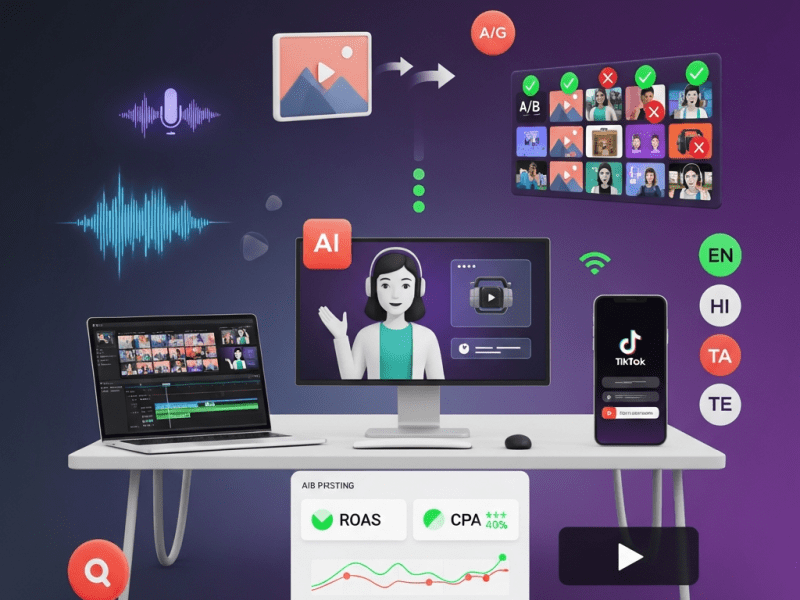
We built a complete AI-generated video ad production system for UrbanFit Pro — producing 120+ video ad creatives monthly at ₹280 per video (vs. ₹18,000 traditional), achieving 3.8x higher creative testing velocity, reducing ad fatigue by 74%, and scaling profitable ad spend 340% while maintaining 5.2x ROAS.
AI Video Ad Strategy & Framework, AI Video Production Pipeline (Text-to-Video, Image-to-Video), AI Voiceover & Narration System, AI-Powered Script-to-Video Workflow, UGC-Style AI Video Ads, Dynamic Product Video Ads, AI Video A/B Testing at Scale, Platform-Specific AI Video Optimization, Video Creative Refresh Automation, Performance Tracking & Iteration System
Tools & Platforms Used
Runway ML (Gen-3 Alpha), HeyGen (AI avatars & presenters), Eleven Labs (AI voiceover), Synthesia (AI spokesperson videos), CapCut Pro (editing & compositing), Midjourney (lifestyle imagery for video), ChatGPT API (OpenAI) (scripts & concepts), D-ID (talking head videos), Canva Pro (thumbnails & overlays), Pika Labs (motion generation), Adobe Firefly (generative fills), Meta Ads Manager, TikTok Ads Manager, YouTube Ads, Google Drive, Airtable (creative tracking), Notion, Shopify (product feeds), Zapier
Project Year
2025
The Overview
UrbanFit Pro is a D2C fitness and activewear brand based in Mumbai, offering a range of 85+ products — performance gym wear, athleisure, yoga apparel, running gear, and gym accessories. Their products feature proprietary DryPulse™ fabric technology (moisture-wicking, anti-odor, 4-way stretch) at price points 40% below comparable brands like Gymshark or Nike. Average order value: ₹2,800. Monthly revenue: ₹68L. Core audience: fitness-conscious urban professionals aged 22-35.
UrbanFit Pro’s paid social strategy was working — they were running Meta and TikTok ads profitably. The problem? They couldn’t produce enough video creative to scale. In performance marketing, creative is the new targeting. Meta’s Advantage+ and TikTok’s Smart Performance campaigns rely on feeding the algorithm dozens of creative variants — and the algorithm burns through creative faster than any production team can replace it.
UrbanFit was producing 8-10 video ads per month using a freelance videographer at ₹15,000-₹20,000 per video. By the time a video was conceptualized, shot, edited, and launched, it had a 2-3 week shelf life before creative fatigue set in (frequency > 4, CTR declining, CPA rising). They needed 40-50 fresh creatives monthly to scale — but at ₹18,000/video, that meant ₹7.2-9L/month just on video production. Their entire monthly ad spend was ₹8L. The production cost would exceed the media spend.
This is the bottleneck killing most D2C brands’ paid social scaling: they can’t produce creative fast enough, cheaply enough, at high enough quality, to feed the algorithm’s insatiable appetite for fresh content.
We built an AI-generated video ad production system — using Runway ML, HeyGen, Eleven Labs, Synthesia, and a suite of AI tools — that produces 120+ video ad creatives monthly at ₹280 per video, enabling UrbanFit to test at 12x the velocity of traditional production, eliminate creative fatigue as a growth bottleneck, and scale ad spend 340% while maintaining profitable ROAS.
The Challenge
Creative Production Bottleneck Strangling Growth:
Metric
Current State
What’s Needed to Scale
Gap
Video ads produced/month
8-10
50-80 (minimum)
5-8x production gap
Cost per video
₹15,000-₹20,000
Needs to be < ₹2,000 for unit economics to work
90% cost reduction needed
Production timeline
2-3 weeks (concept to launch)
2-3 days (for testing velocity)
85% timeline reduction needed
Creative testing velocity
2-3 new concepts/month
15-20 concepts/month
5-7x testing velocity needed
Creative lifespan before fatigue
14-18 days
Need constant rotation to maintain performance
Need 4x more creatives in rotation
Creative Fatigue Destroying Performance:
Week
Frequency
CTR
CPA
Status
Week 1 (Fresh creative)
1.2
2.4%
₹380
✅ Performing
Week 2
2.8
1.8%
₹520
⚠️ Declining
Week 3
4.1
1.1%
₹780
❌ Fatigued
Week 4
5.6
0.7%
₹1,100
☠️ Dead — but still running because no replacement ready
With only 8-10 new videos/month, fatigued creatives stayed live far too long — wasting budget on declining performance.
Traditional Production Limitations:
Limitation
Impact
Requires physical shoot
Scheduling models, gym locations, equipment, photographer — 3-5 day lead time minimum
Weather/location dependent
Outdoor shoots canceled or rescheduled due to Mumbai weather
VISUAL GENERATION LAYER: Midjourney ────→ Lifestyle backgrounds, model imagery, mood visuals Runway ML ─────→ Image-to-video (product motion, scene animation) Pika Labs ─────→ Motion generation for static product photos Adobe Firefly ─→ Generative fill for product placement in scenes
HUMAN PRESENTER LAYER: HeyGen ────────→ AI avatar presenters (diverse, customizable) Synthesia ─────→ Professional AI spokesperson videos D-ID ──────────→ Photo-to-talking-head (UGC-style realism)
EDITING & COMPOSITING LAYER: CapCut Pro ────→ Final assembly, transitions, text overlays, music, sound effects, platform formatting Canva Pro ─────→ Thumbnail, overlay graphics, text cards
DEPLOYMENT LAYER: Meta Ads Manager ─→ Facebook + Instagram ad deployment TikTok Ads ────────→ TikTok ad deployment YouTube Ads ───────→ YouTube pre-roll/Shorts deployment Airtable ──────────→ Creative performance tracking ━━━━━━━━━━━━━━━━━━━━━━━━━━━━━━━━━━━━━━━━━━━━━━━━━━━━
Quality Control Framework — “AI + Human” Standard:
Monthly Proven Winners Identified: 12-15 (fed into scaling campaigns)
Creative Lifecycle Management:
AI VIDEO AD CREATIVE LIFECYCLE
━━━━━━━━━━━━━━━━━━━━━━━━━━━━━━

STAGE 1 — TESTING (Days 1-3)
  → New AI video enters testing campaign
  → Budget: ₹500-₹1,000 per variant
  → Metrics watched: 3-sec view rate, CTR, CPC
  → Decision: Kill (below threshold) or Promote (above threshold)
  → Kill rate: ~60% of creatives killed at this stage (that's OK —
    test fast, fail cheap, find winners)

STAGE 2 — VALIDATION (Days 4-7)
  → Promoted creative runs in conversion campaign
  → Budget: ₹2,000-₹5,000
  → Metrics watched: CPA, ROAS, conversion rate
  → Decision: Scale (ROAS > 4x) or Hold (ROAS 2-4x) or Kill (ROAS < 2x)

STAGE 3 — SCALING (Days 8-21)
  → Winning creative scaled to higher budget
  → Monitor: Frequency, CTR trend, CPA trend
  → When frequency > 3 → prepare replacement
  → When CTR declines 30% from peak → reduce budget, not kill

STAGE 4 — FATIGUE (Days 14-28)
  → Creative performance declining
  → Action: Create "creative refresh" — same concept, new hook,
    new presenter, or new angle
  → AI enables refresh in 30-45 min (vs. 2-3 weeks traditional)
  → Original creative retired to "archive" (may be revived in 60 days)

STAGE 5 — RETIREMENT
  → Creative fully paused
  → Performance data logged in Airtable for learning
  → Winning elements (hook, angle, presenter) noted for future creative
  → Creative added to "inspiration library" for future concept development

TRADITIONAL TIMELINE: 3 weeks to produce → 2 weeks of performance → dead
AI TIMELINE: 1 hour to produce → test in 3 days → iterate in 1 hour →
  continuous freshness
━━━━━━━━━━━━━━━━━━━━━━━━━━━━━━━━━━━━━━━━━━━━━━━━━━━━━━━━━━━━━
Creative Performance Dashboard (Airtable + Google Sheets):
Dashboard Section
Metrics
View
Creative Library Overview
Total creatives: Active / Testing / Paused / Archived. Creatives by type, language, angle
Real-time
Testing Pipeline
Creatives currently in testing, performance vs. threshold, predicted winners
Daily
Top Performers Leaderboard
Top 20 creatives by ROAS — with video thumbnail, type, angle, language, days active, total revenue driven
Weekly
Creative Fatigue Monitor
All active creatives: current frequency, CTR trend (7-day), CPA trend, estimated days until fatigue
Daily
Angle Performance
ROAS by script angle (savings vs. performance vs. social proof vs. comparison vs. urgency)
Monthly
Format Performance
ROAS by video type (avatar vs. product showcase vs. UGC-style vs. motion vs. testimonial)
Monthly
Language Performance
CPA and ROAS by language version (English vs. Hindi vs. Tamil vs. Telugu)
Monthly
Production Metrics
Videos produced this month, cost per video, production time per video, rejection rate, cost trend
Monthly
Phase 5: Scaling System, Team Training & Handover (Week 5)
Scaling Playbook — Creative-Led Scaling:
Scaling Scenario
Action
Creative Requirement
ROAS > 6x on a creative
Scale budget 20% every 3 days + duplicate to new audiences
Prepare 3 variations (new hooks) to rotate when fatigue hits
Winning angle identified
Scale angle horizontally — 5 new creatives with same angle, different execution
AI produces 5 variants in 4 hours
New product launch
Launch with 15 AI video variants across 5 angles simultaneously
AI produces all 15 in 2 days
Entering new region/language
Produce winning creatives in new language + culturally adapted
AI translates and lip-syncs in 2 hours per language
Seasonal campaign
Produce 20-30 seasonal creatives with urgency messaging
AI produces full seasonal set in 3 days
Ad spend increase (e.g., ₹8L → ₹20L)
Need 3x more creative volume to prevent faster fatigue at higher spend
AI scales from 120 to 300+ videos/month within same system
Monthly Production Schedule:
MONTHLY AI VIDEO PRODUCTION CADENCE ━━━━━━━━━━━━━━━━━━━━━━━━━━━━━━━━━━━
WEEK 1 — ANALYSIS + PLANNING (Day 1-2): → Review last month's creative performance → Identify: winning angles, fatigued creatives, gaps in creative mix → Plan this month's creative production: types, angles, products, languages → Write/generate scripts for all planned videos (ChatGPT batch)
WEEK 3 — PRODUCTION BATCH 2 (Day 15-21): → Produce 40 videos (informed by Batch 1 learnings) → More of what's working, less of what's not → Include "creative refreshes" for fatiguing winners from Batch 1
WEEK 3-4 — ITERATE + SCALE (Day 18-28): → Batch 2 enters testing → Scale proven winners from both batches → Create hook/presenter variations of top performers
WEEK 4 — REPORTING + NEXT MONTH PLANNING (Day 25-30): → Monthly creative performance report → Update creative library with performance data → Archive retired creatives → Begin next month planning cycle
Airtable creative tracker + Google Sheets analysis templates — ready to use
Monthly Production Calendar Template
Repeatable monthly production schedule with task assignments and deadlines
Quality Control Checklist
5-gate review checklist (printable) for every video before deployment
Key Features Delivered
Feature
Description
6-Type AI Video Framework
Avatar presenter, product showcase, UGC-style, dynamic motion, testimonial, and comparison/explainer — each with defined tool stack, production pipeline, time, and cost
21-28 days (rotation reduces per-creative frequency)
⬆ 50-56%
Ad Creative Fatigue Incidents/Month
6-8 (most creatives fatigued)
2-3 (caught and refreshed before performance tanks)
⬇ 63-74%
Monthly Ad Spend
₹8,00,000
₹35,20,000 (scaled with confidence)
⬆ 340%
Blended ROAS
4.1x
5.2x (improved despite 4x more spend)
⬆ 27%
Monthly Revenue from Paid Social
₹32,80,000
₹1,83,04,000
⬆ 458%
Cost Per Acquisition
₹620
₹410
⬇ 34%
Ad CTR (Best AI Creative Type — UGC-Style)
—
3.6% (vs. 2.1% brand average)
—
Video View-Through Rate (AI Ads Avg)
28% (traditional)
46% (AI — shorter, hook-optimized)
⬆ 64%
Languages Covered
English only
English, Hindi, Tamil, Telugu
4 markets
Hindi Market Revenue Contribution
₹0
₹28,40,000/month (15.5% of total)
—
Creative Library Size (Cumulative)
~60 (all time, mostly dead)
680+ (tested, with performance data)
⬆ 1,033%
📋 Case Study Summary
Challenge: UrbanFit Pro — a D2C fitness activewear brand doing ₹68L/month — was stuck at ₹8L monthly ad spend because they couldn’t produce video creative fast enough. At ₹18,000 per video and 2-3 weeks per production cycle, they made 8-10 videos/month while needing 50-80. Creative fatigue destroyed ad performance every 14 days with no replacements ready. Scaling ad spend was impossible without scaling creative production — the bottleneck killing most D2C brands’ growth.
Solution: We built an AI-generated video ad production system using Runway ML, HeyGen, Eleven Labs, Synthesia, D-ID, Midjourney, and CapCut — creating 6 production pipelines (avatar presenter, product showcase, UGC-style, dynamic motion, testimonial, comparison) with a 5-gate quality control system. Produced 120+ videos monthly at ₹280/video (98.4% cost reduction). Built a 45-script master library across 5 angles. Enabled multi-language production (English, Hindi, Tamil, Telugu) at ₹80-120 per additional language. Implemented AI creative testing at scale (80-100 variants tested monthly) with a 5-stage creative lifecycle management system from testing through retirement.
Result: Video production jumped from 8 to 120+/month. Cost dropped from ₹18,000 to ₹280/video. Ad spend scaled 340% (₹8L to ₹35.2L) while ROAS improved from 4.1x to 5.2x. Monthly paid social revenue grew 458% to ₹1.83Cr. CPA dropped 34%. Creative fatigue incidents fell 74%. UGC-style AI ads achieved 3.6% CTR. Hindi market alone added ₹28.4L/month in revenue. The creative library grew to 680+ tested videos with performance data on every single one. AI didn’t replace creativity — it removed the production bottleneck and let strategy win.
Your Creative Bottleneck Is Your Growth Ceiling
We build AI video ad production systems that produce 120+ video creatives monthly at a fraction of traditional cost — enabling you to test faster, scale bigger, and never let creative fatigue limit your growth again.
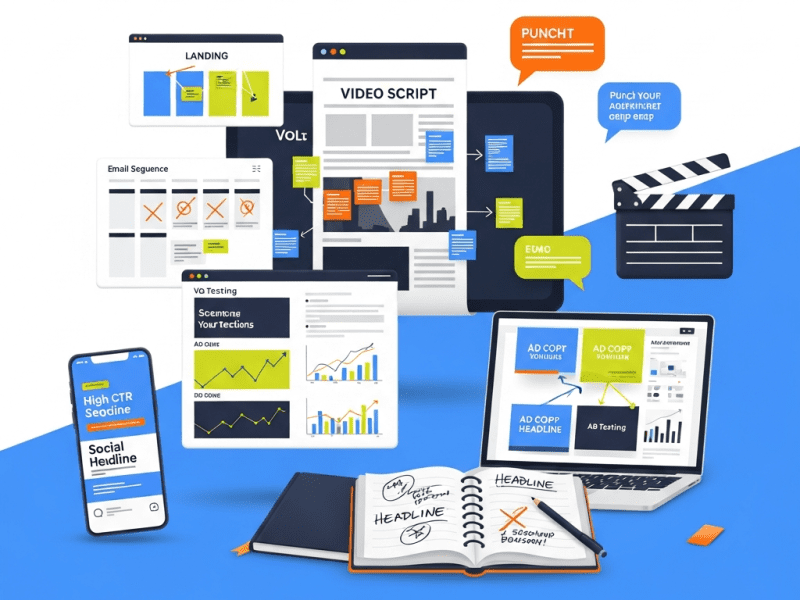
We built a complete ad copywriting and script system for VoltEdge EV — producing 200+ conversion-optimized copy assets across video scripts, ad copy, landing pages, and email sequences, increasing ad CTR by 186%, lifting landing page conversion rate by 142%, and giving the brand a distinctive voice that turns EV skeptics into buyers.
Brand Messaging Architecture, Ad Copy Framework & Tone System, Video Script Library (Short-Form + Long-Form), Sales Page & Landing Page Copy, Email Sequence Copywriting, Social Media Caption Framework, A/B Testing Copy Variants, Objection-Handling Copy Bank, Competitor Messaging Analysis, Copy Style Guide & Team Training
Tools & Platforms Used
Google Docs, Notion, Airtable, ChatGPT API (OpenAI), Jasper AI, Hemingway Editor, Grammarly, Canva Pro (ad mockups), CapCut Pro (video script storyboarding), Google Sheets (A/B test tracking), Meta Ads Manager (ad copy deployment), YouTube (script deployment), Slack, Loom, Google Analytics 4, Hotjar (landing page copy testing)
Project Year
2025
The Overview
VoltEdge EV is an electric vehicle startup selling two products — a high-performance electric scooter (VoltEdge Bolt, ₹1,15,000) and an urban commuter e-scooter (VoltEdge Glide, ₹78,000). Their scooters are genuinely impressive — 120km true range, 0-40 kmph in 3.2 seconds, swappable batteries, IoT-connected dashboard, and a 5-year/50,000km warranty. In independent testing, VoltEdge outperformed Ather, Ola, and TVS iQube on range, build quality, and after-sales service.
But their marketing copy was killing them.
Their ads read like engineering spec sheets: “150Nm torque, 3.7kWh lithium-ion battery, IP67 rated motor, BLDC hub motor architecture.” Their landing page was a feature dump — 47 bullet points of technical specifications with zero emotional resonance. Their video scripts were product demos narrated in a monotone by a founder who, brilliant as he was, spoke to the camera like he was presenting at an engineering conference.
The EV market in India is an emotional purchase disguised as a rational one. Customers say they buy EVs for fuel savings and environment — but they actually buy for status, innovation identity, the thrill of silent acceleration, and the feeling of being “ahead of the curve.” Ather understood this — their “Made in Madras” campaign sold identity, not specs. VoltEdge was selling specs to an audience buying feelings.
We built a complete ad copywriting and script system — from brand messaging architecture and voice framework to video scripts, ad copy variants, landing page copy, email sequences, and an objection-handling copy bank — giving VoltEdge words that sell, not just inform.
The Challenge
Engineering-First Copy, Zero Emotional Resonance: Every piece of copy read like a technical whitepaper. The founder wrote most copy himself — a brilliant engineer with zero marketing training. Headlines like “Advanced BLDC Motor with Regenerative Braking” replaced what should have been “The Smoothest Ride You’ve Never Heard Coming.”
Abysmal Ad Performance Due to Copy:
Metric
VoltEdge (Before)
Industry Benchmark (EV/Auto)
Gap
Ad CTR (Meta)
0.7%
1.8%–2.5%
61–72% below
Landing Page Conversion Rate
1.4%
3.0%–4.5%
53–69% below
Video Watch-Through Rate
18%
40%–55%
55–67% below
Email Open Rate
12%
22%–28%
46–57% below
Email Click Rate
0.8%
3.0%–4.5%
73–82% below
No Objection Handling: The #1 reason EV prospects don’t convert: range anxiety, charging infrastructure fear, battery replacement cost uncertainty, and resale value doubt. VoltEdge’s copy addressed none of these. No FAQ content, no comparison content, no myth-busting, no social proof addressing specific fears.
Competitor Messaging Superiority:
Competitor
Messaging Approach
Why It Works
Ather Energy
Identity + Community — “Join the revolution,” “Made in Madras”
Sells belonging and pride, not just a scooter
Ola Electric
Aspiration + Future — “Move OS,” “The future is here”
Positions as tech product, not just vehicle
TVS iQube
Trust + Heritage — “From the house of TVS,” practical benefits
No Brand Voice: No documented tone, personality, or messaging framework. Copy varied wildly — formal engineering language in ads, casual slang in social posts, corporate jargon on the website. The brand sounded like three different companies.
“120km real range. 5-year warranty. 1,200+ riders who switched and never looked back.”
Compare / Learn More / See Reviews
Decision
“I’m almost ready — need a final push”
Overcome last objections, create urgency
“The math: ₹0.15/km vs. ₹4.50/km. Over 5 years, that’s ₹3.2 lakh saved. Enough for a vacation every year.”
Book Test Ride / Reserve Yours / Buy Now
Post-Purchase
“Did I make the right choice?”
Validate, build advocacy
“Welcome to the 1,200+ riders who outride everything. Your adventure starts now.”
Share Your Ride / Refer a Friend
Phase 2: Ad Copy System — Multi-Platform (Week 2)
Ad Copy Framework — 5 Angles × 3 Variants:
Copy Angle
Emotional Trigger
Headline Example
Body Copy Example
Best For
💰 Savings
Financial relief, “I’m smarter than petrol riders”
“Your petrol bill last month? ₹3,200. Ours? ₹180.”
“The average Bangalorean spends ₹3,200/month on petrol for a 30km daily commute. VoltEdge Bolt owners spend ₹180. That’s ₹36,000 saved every year — and we haven’t even talked about zero maintenance, zero oil changes, and zero engine servicing.”
MOFU/BOFU — rational buyers, budget-conscious
⚡ Performance
Thrill, status, “this is exciting tech”
“0 to 40 in 3.2 seconds. And you won’t hear it coming.”
“150Nm of instant torque. No gear shifts. No engine lag. Just twist and go — silent, smooth, absurdly fast. The traffic light turns green and you’re already three cars ahead before anyone else moves.”
TOFU/MOFU — performance seekers, young professionals
😰 Objection Killer
Relief from fear, “my concerns are addressed”
“Worried about range? We were too. So we tested in Bangalore traffic, not a lab.”
“120km real-world range. Tested in Bangalore traffic — with potholes, signals, and that one stretch where you always get stuck for 20 minutes. Not ‘up to 120km under ideal conditions.’ Actual, everyday, your-commute range.”
MOFU/BOFU — skeptical researchers
🌍 Identity
Pride, belonging, future-forward identity
“You’re not just buying a scooter. You’re voting for the future.”
“Every time you ride a VoltEdge, you save 1.2kg of CO2 emissions. Over a year, that’s 438kg — the equivalent of planting 20 trees. Plus, you look ridiculously cool while doing it.”
TOFU — values-driven, socially conscious
📣 Social Proof
Trust, FOMO, “others like me chose this”
“1,200+ riders switched. Here’s why none of them switched back.”
“Rahul in Koramangala switched 8 months ago. His fuel savings? ₹28,800 and counting. His service visits? Zero. His only complaint? ‘I should have switched sooner.’ Join 1,200+ riders who outride everything.”
MOFU/BOFU — trust-seeking, undecided
Each angle produced in 3 variants (A/B/C) for testing = 15 core ad copy sets
Each set adapted for: Meta Feed, Meta Stories, YouTube pre-roll, Google Search, Display = 75 total ad copy pieces
VOLTEDGE — "THE MORNING AFTER" (60 SEC)
━━━━━━━━━━━━━━━━━━━━━━━━━━━━━━━━━━━━━━━

[0-5s] COLD OPEN — VISUAL HOOK
Visual: Close-up of a petrol pump meter spinning rapidly — ₹50... ₹100... ₹200... ₹350...
Audio: Petrol pump clicking sounds, increasing in speed
Text on screen: None

[5-10s] THE PAIN
Visual: Rider's face watching the meter, slight wince at ₹350
VO: "₹350. Again. For a week's commute."
Visual: Cut to traffic jam — exhaust fumes, engine noise, heat shimmer

[10-20s] THE SHIFT
Visual: Morning. Same rider walks to their VoltEdge Bolt in parking.
Silence. They twist the throttle.
VO: "What if tomorrow morning felt... different?"
Visual: Smooth, silent ride through Bangalore streets. No engine roar.
Wind. Trees. Space.
Audio: Ambient city sounds — birds, distant traffic — but no engine noise

[20-35s] THE EXPERIENCE
Visual: Quick cuts — weaving through traffic effortlessly, pulling
ahead at traffic light (0-40 in 3.2s), gliding past a petrol station
(rider glances, smiles), arriving at office with 92km range remaining
VO: "120 kilometers of range. ₹0.15 per kilometer. Zero noise.
Zero emissions. And that feeling — that silent, instant, grin-inducing
feeling — of leaving everything behind."

[35-50s] THE PROOF
Visual: Split screen — ₹0.15/km vs. ₹4.50/km. 5-year warranty badge.
4.8★ review score. Riders montage — diverse people, diverse cities.
VO: "1,200 riders switched. Their fuel savings? ₹36,000 a year.
Their service bills? Almost zero. Their only regret?"

[50-55s] TESTIMONIAL PUNCH
Visual: Real customer (Rahul, 32), casual, direct to camera
Customer: "I should have done this two years ago."

[55-60s] CLOSE
Visual: VoltEdge Bolt — hero shot, golden hour lighting
Text: "VoltEdge Bolt. From ₹1,15,000."
VO: "Outride Everything."
Text: "Book your test ride → voltedge.in"
━━━━━━━━━━━━━━━━━━━━━━━━━━━━━━━━━━━━━━━━━━━━━━━━━━━━
[0-3s] HOOK Text on screen: "But what about range? 🤔" VO: "Everyone asks this."
[3-10s] ACKNOWLEDGE + DESTROY Visual: Map of Bangalore with 120km route highlighted — home → office → gym → grocery → home → still 40km remaining VO: "120 kilometers. That's home to office and back — for three days — on a single charge."
[10-17s] PROOF Visual: Dashboard showing real range after full day of riding: 68km remaining VO: "And that's in real Bangalore traffic. We tested. We're obsessed."
[17-20s] CTA Visual: VoltEdge Bolt, charging at home (regular plug) Text: "Charges at any plug point. Like your phone." Text: "Book a test ride → voltedge.in" ━━━━━━━━━━━━━━━━━━━━━━━━━━━━━━━━━━━━━━━━━━━━━━━━━━━━
Email Sequence Copy — Test Ride Nurture (7 Emails):
Email #
Timing
Subject Line
Purpose
Copy Angle
1
Immediate (post-test ride booking)
“Your test ride is confirmed 🛵⚡”
Confirm + excite
Logistics + what to expect + “You’re about to feel something different”
2
Day 1 post-test ride
“So… how was the silence? 😏”
Capture emotion while fresh
Reinforce the feeling, not the specs — “That grin at the traffic light? That’s what 150Nm feels like”
3
Day 3
“Let’s talk money (you’re going to like this)”
Financial case
Personalized savings calculation based on their commute input, comparison to petrol cost
4
Day 5
“Your biggest worry — answered”
Objection handling
Address top 3 fears: range, charging, battery — with data and real customer quotes
5
Day 8
“Rahul saved ₹28,800 in 8 months”
Social proof story
Full customer story — relatable, specific, with photo and quote
6
Day 12
“This week only: ₹5,000 off + free accessories”
Offer + urgency
Time-limited incentive to convert fence-sitters — create genuine urgency
7
Day 18
“No pressure. But your petrol bill just went up again.”
Gentle nudge + value reminder
Soft, no-hard-sell — “Whenever you’re ready, we’re here. But every month of waiting costs you ₹3,200.”
Objection-Handling Copy Bank (12 Objections):
Objection
Short-Form (Social/Ad)
Medium-Form (FAQ/Email)
“120km isn’t enough range”
“The average Indian commute is 22km/day. 120km = 5 days without charging. When’s the last time your petrol lasted that long?”
“We get it — range anxiety is real. So let’s do the math: The average daily commute in Bangalore is 22km. VoltEdge Bolt’s 120km range means you charge once every 5 working days. Even with a grocery run and weekend ride, you’re charging twice a week. At home. While you sleep. With any plug point. Range anxiety solved.”
“Where do I charge?”
“Anywhere there’s a plug. Your home. Your office. Your friend’s house. Charges to 80% in 4 hours.”
“Unlike cars, electric scooters don’t need special charging stations. Plug into any regular 5A socket — at home, at office, at a café. Full charge in 5 hours, 80% in 4. Most VoltEdge riders charge overnight and never think about it again. It’s literally easier than going to a petrol pump.”
“Battery replacement is expensive”
“5-year warranty covers the battery. But in case you’re wondering — our batteries retain 80% capacity after 1,50,000 km.”
“VoltEdge batteries are rated for 1,500+ charge cycles — that’s over 1,50,000 km of riding. After 1,500 cycles, they still retain 80%+ capacity. And our 5-year/50,000km warranty covers the battery. For context, most riders replace their petrol scooter after 5-7 years. Your VoltEdge battery will outlast your desire to ride the same scooter.”
“EVs have no resale value”
“Fun fact: Used EVs now sell at 65-70% of purchase price after 2 years. Used petrol scooters? 45-50%. Numbers don’t lie.”
“The resale market for EVs is growing faster than any vehicle segment. VoltEdge owners who’ve sold after 2 years report resale values of 65-70% of purchase price — significantly better than petrol scooters (45-50%). As charging infrastructure grows and petrol prices rise, EV resale value only improves.”
Hook (unexpected angle on feature) → Benefit translation → Proof point → CTA
60-100 words
“Your scooter has a clutch, gears, oil, filters, belts, spark plugs, and 200+ moving parts that can break. VoltEdge Bolt has 3 moving parts. Three. That’s why our riders spend ₹0 on servicing while petrol scooter owners average ₹4,500/year. Less parts. Less problems. More ride. → Link in bio to book a test ride.”
Customer Story
Quote or story intro → Specific detail (savings, experience, moment) → Emotional payoff → Community CTA
80-120 words
Introduce customer → their specific numbers → their emotional moment → “Share your ride story with #OutrideEverything”
Objection Buster
Question (the objection) → Acknowledgment → Answer with data → Mic-drop closing line
50-80 words
“But what if it rains? → Valid question. → VoltEdge Bolt is IP67 rated — fully waterproof. Rides through Bangalore monsoon without flinching. → Your petrol scooter’s engine? Not so much.”
A/B Copy Testing System:
Test Element
Variants
Test Duration
Sample Size
Decision Metric
Headlines
3 variants per ad set — Savings vs. Performance vs. Identity angle
5 days or ₹3,000 spend
Min. 1,000 impressions per variant
CTR (TOFU), Conversion Rate (BOFU)
CTA Text
“Book Test Ride” vs. “Ride One Free” vs. “See It In Person” vs. “Calculate Your Savings”
5 days
Min. 500 clicks total
Click-through rate + downstream conversion
Email Subject Lines
2 variants per email — tested on 20% of list, winner sent to 80%
4 hours (open rate window)
Min. 2,000 recipients per variant
Open rate
Landing Page Headlines
2 variants
7-14 days
Min. 1,000 visitors per variant
Conversion rate (test ride bookings)
Long vs. Short Copy
Detailed (200+ words) vs. Concise (<80 words) — same message
5 days
Equal budget split
CTR + Conversion Rate combination
Copy Asset Inventory (Total Delivered):
Asset Category
Quantity
Formats
Ad Copy Sets
75
15 core sets × 5 platform adaptations
Video Scripts
24
6 types × 4 scripts each (with shot directions)
Landing Page Copy
3
Main product page + Bolt-specific + Glide-specific
Email Sequences
14
Test ride nurture (7) + Post-purchase onboarding (7)
Social Captions
50
Templates + examples across 5 content types
Objection Copy Bank
24
12 objections × short-form + medium-form variants
Tagline Variants
8
Tested and ranked by audience response
Google Search Ad Copy
18
6 campaigns × 3 responsive search ad variants
SMS/WhatsApp Templates
12
Test ride reminders, post-ride follow-up, offer announcements
TOTAL
228 copy assets
Key Features Delivered
Feature
Description
Brand Messaging Architecture
6-layer framework from brand purpose to tagline (“Outride Everything”) — ensuring all copy ladders up to a unified brand story
Brand Voice Framework
4 voice attributes (Confident, Visceral, Straight-Talking, Challenger) with “sounds like / doesn’t sound like” examples and copy dos/don’ts
5-Angle Ad Copy System
Savings, Performance, Objection Killer, Identity, and Social Proof angles — each with 3 A/B variants and 5 platform adaptations (75 total ad copy sets)
6-Type Video Script Library
Hero brand films, product showcases, testimonials, objection busters, comparisons, and trend hooks — 24 complete scripts with shot directions and audio notes
Landing Page Copy Architecture
8-section conversion-optimized copy framework with hero, pain-solution, feature-benefit translator, social proof, FAQ, comparison, savings calculator, and CTA
Email Nurture Sequences
14 emails across test ride nurture (7) and post-purchase onboarding (7) — with subject line variants, timing strategy, and A/B testing plan
Objection-Handling Copy Bank
12 common EV purchase objections with short-form (social/ad) and medium-form (FAQ/email) copy responses backed by data and customer quotes
Social Caption Framework
5 content-type caption structures with length guidelines, hook strategies, and CTA patterns
A/B Copy Testing System
Structured testing framework for headlines, CTAs, subject lines, landing page copy, and copy length — with clear methodology and decision criteria
228 Copy Assets
Complete deliverable library covering ads, scripts, landing pages, emails, social captions, objections, taglines, search ads, and messaging templates
Challenge: VoltEdge EV — a Bangalore-based electric scooter brand with genuinely superior products (120km range, 150Nm torque, 5-year warranty, 4.8★ reviews) — had marketing copy that read like engineering spec sheets. Ad CTR was 0.7% (vs. 2%+ benchmark). Landing page conversion was 1.4%. Video watch-through was 18%. No brand voice, no emotional messaging, no objection handling, no structured copy system. Competitors like Ather sold identity and feeling; VoltEdge sold “BLDC hub motor architecture.”
Solution: We built a complete ad copywriting and script system — a 6-layer brand messaging architecture with “Outride Everything” tagline; a 4-attribute brand voice framework; 75 ad copy sets across 5 angles (Savings, Performance, Objection, Identity, Social Proof) adapted for Meta, YouTube, and Google; 24 video scripts across 6 types with shot directions; 3 conversion-optimized landing page copy sets; 14-email nurture sequences; a 12-objection copy bank with data-backed responses; social caption frameworks; and a structured A/B testing system. Total: 228 copy assets.
Result: Ad CTR jumped 186% (0.7% → 2.0%). Landing page conversion grew 142%. Video watch-through reached 52%. Email open rates hit 34% (from 12%). Test ride bookings grew 217%. Test-ride-to-purchase conversion improved 78% through copy-driven nurture. Monthly revenue from copy-optimized channels grew 391% to ₹1.08Cr. Cost per acquisition dropped 82%. The savings copy angle achieved 3.4% CTR — nearly 5x the original baseline. Words sell. The right words sell a lot more.
Great Products Fail Because of Bad Words
We write ad copy and scripts that turn features into feelings, specs into stories, and browsers into buyers — with brand messaging frameworks, video scripts, landing page copy, email sequences, and A/B testing systems that make every word earn its place.