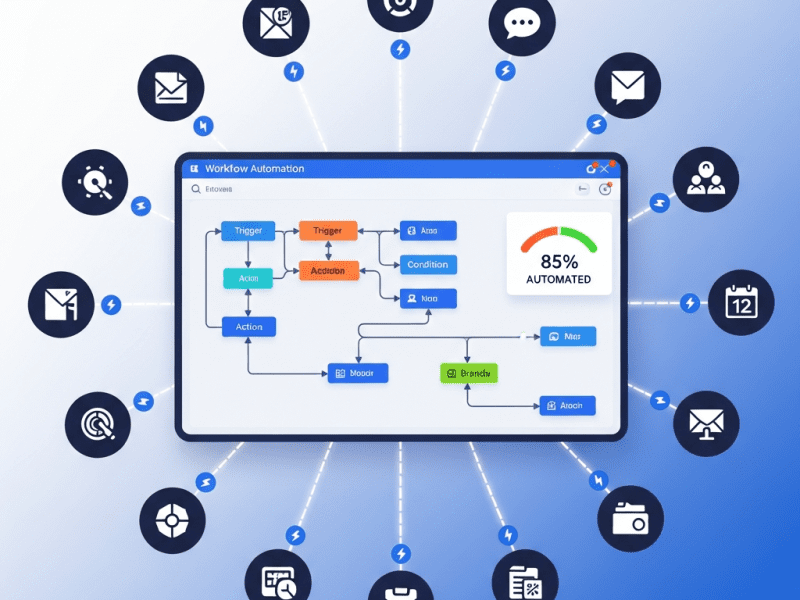
We architected a complete workflow automation system for SwiftLogix Digital Agency — connecting 16 tools into a seamless operational engine that eliminated 94 hours of weekly manual work, reduced project delivery time by 38%, and ended the chaos of things falling through the cracks.
Zapier, Make (Integromat), Airtable, Slack, Asana, Google Workspace (Drive, Sheets, Docs, Calendar, Gmail), HubSpot CRM, QuickBooks Online, Harvest (Time Tracking), Typeform, PandaDoc, Dropbox, Loom, ChatGPT API (OpenAI), Calendly, Stripe, WordPress, Notion
Project Year
2025
The Overview
SwiftLogix is a 22-person digital marketing agency managing 35 active client accounts across SEO, paid advertising, social media management, content marketing, and web development. Their team is talented and their client results are strong — but operationally, they were held together by duct tape.
Every day, the team juggled 16 different tools that didn’t talk to each other. When a new client signed, someone manually created folders in Google Drive, set up the client in HubSpot, created a project in Asana, added them to Harvest for time tracking, built a Slack channel, generated an invoice in QuickBooks, and sent a welcome email — 23 separate manual steps taking 2+ hours per new client. And that was just onboarding.
Throughout the client lifecycle — project kickoffs, content approvals, deliverable handoffs, status updates, time logging, invoice generation, and contract renewals — the team performed hundreds of repetitive, manual, error-prone tasks every week. Information was copy-pasted between tools. Status updates were communicated via Slack messages that got buried. Approvals required chasing people through 3 different channels. And at least once a week, something important fell through the cracks — a missed deadline, a forgotten follow-up, an unbilled hour, or an unapproved asset that went live.
We built a comprehensive workflow automation system that connects all 16 tools into a unified, intelligent operational engine — automating every predictable process, eliminating manual data transfer, enforcing accountability through automated routing, and ensuring nothing ever falls through the cracks again.
The Challenge
16 Disconnected Tools: The team used Asana, Slack, Google Workspace, HubSpot, QuickBooks, Harvest, Dropbox, PandaDoc, Typeform, Calendly, Stripe, Loom, Notion, WordPress, Airtable, and email — none integrated with each other. Every piece of information had to be manually transferred between systems.
94 Hours of Weekly Manual Busywork: Across the 22-person team, an estimated 94 hours per week were spent on manual operational tasks:
Task Category
Hours/Week
Examples
Data entry & cross-platform updates
22 hrs
Copying client info into multiple tools, updating statuses in 3 places
Client onboarding setup
12 hrs
23 manual steps per new client across 8 tools
Project management admin
18 hrs
Creating tasks, assigning work, setting due dates, updating statuses
Approval & feedback chasing
14 hrs
Sending assets for review, following up, tracking revisions
Reporting & status compilation
11 hrs
Pulling data from multiple tools into client reports
Invoice & billing preparation
8 hrs
Matching time entries to clients, generating invoices
Internal communication overhead
9 hrs
Searching Slack for information, repeating updates across channels
Things Falling Through Cracks: At least 5-8 incidents per week where tasks were missed, deadlines slipped, or deliverables went untracked. Root cause: no automated handoffs between workflow stages — everything depended on someone remembering to do the next step.
Client Onboarding Inconsistency: The 23-step new client setup had no checklist, no automation, and no accountability. Different account managers skipped different steps. Some clients had Slack channels created on day 1; others waited 2 weeks. Some got welcome emails; others didn’t. The experience was inconsistent and unprofessional.
Approval Bottlenecks: Getting client approval on content, designs, or ad copy required: create asset → upload to Drive → copy link → paste in Slack → tag client → wait → follow up in email → client responds in WhatsApp → update in Asana → notify designer. Average approval cycle: 4.2 days. Target: under 24 hours.
Unbilled Hours Bleeding Revenue: Time tracking in Harvest was inconsistent. End-of-month analysis consistently revealed 12-18% of billable hours went unlogged — an estimated $8,400/month in lost revenue simply because people forgot to track time.
No Workflow Visibility: The operations manager had no way to see which workflows were running smoothly and which were stuck. “Where is this project?” required asking 3 people and checking 4 tools.
TRIGGER: Deal marked "Won" in HubSpot ━━━━━━━━━━━━━━━━━━━━━━━━━━━━━━━━━━━━
INSTANT (Zapier + Make — All Automatic): ✅ Google Drive: Client folder created with 8 subfolders └── [Client Name] ├── 01_Strategy & Briefs ├── 02_Content ├── 03_Design Assets ├── 04_Ad Accounts & Reports ├── 05_Client Approvals ├── 06_Meeting Notes ├── 07_Invoices & Billing └── 08_Contracts & Legal
✅ Asana: New project created from template → Pre-loaded with phase-specific task lists → Assigned to account manager from HubSpot deal owner → Due dates auto-calculated from start date
✅ Slack: Private client channel created (#client-[name]) → Account manager + relevant team members auto-added → Welcome message posted with project links
✅ Harvest: New project + client created → Budget hours set from deal scope → Team members assigned for time tracking
✅ QuickBooks: Customer record created → Billing details populated from HubSpot
✅ Calendly: Kickoff meeting link generated → Sent to client with scheduling options
✅ Gmail: Welcome email sent to client → Branded template with next steps, team intro, access forms
CONTENT WORKFLOW (Blog Post Example)
━━━━━━━━━━━━━━━━━━━━━━━━━━━━━━━━━━━━

TRIGGER: Content task created in Asana

STAGE 1 — BRIEF
  → Template brief auto-populated in Google Docs
  → Writer assigned based on availability (Asana workload balancing)
  → Due date auto-set (3 business days for draft)
  → Slack notification to writer

STAGE 2 — DRAFT
  → Writer moves task to "Drafting" in Asana
  → Slack status update posted to client channel
  → When writer moves to "Ready for Review":
    → Auto-notifies editor via Slack
    → Due date for review: 1 business day

STAGE 3 — INTERNAL REVIEW
  → Editor reviews in Google Docs (suggestion mode)
  → Moves to "Revisions Needed" or "Ready for Client"
  → If revisions: writer re-notified with comments link
  → If ready: auto-moves to Stage 4

STAGE 4 — CLIENT APPROVAL
  → Client receives email with Google Docs link
  → Approval request logged in Airtable
  → If no response in 48 hours: auto-reminder email
  → If no response in 96 hours: Slack alert to account manager
  → Client approves (via email button or Asana):
    → Task moves to "Approved — Schedule"

STAGE 5 — PUBLISH
  → Content scheduled in WordPress (or manual publish alert)
  → Task marked complete in Asana
  → Time entries pulled from Harvest → linked to client
  → Client notified: "Your new blog post is live! [Link]"
  → Social promotion tasks auto-created for social team
  → Asset archived in client's Google Drive folder
━━━━━━━━━━━━━━━━━━━━━━━━━━━━━━━━━━━━
Workflow 5: Design Request & Approval Pipeline
Stage
Trigger
Automation
Request submitted
Asana form or Slack command /design-request
Task created in Asana with brief template, assigned to designer based on workload, Slack notification sent
Phase 4: Financial & Time Tracking Workflow Automation (Week 4)
Workflow 7: Smart Time Tracking System
Trigger
Action
Asana task assigned to team member
Harvest project + task pre-linked — one click to start timer
5:30 PM daily
Slack DM to anyone who logged <6 hours: “Don’t forget to log your time today 🕐”
Team member completes Asana task without Harvest entry
Alert: “Task completed but no time logged — please update Harvest”
Friday 4 PM
Weekly summary DM: “You logged X hours this week (target: 35). [X] tasks have unlogged time.”
End of month
AI identifies unbilled hours by comparing Asana completed tasks vs. Harvest entries → flags gaps
Workflow 8: Automated Invoice Generation
textINVOICE AUTOMATION FLOW
━━━━━━━━━━━━━━━━━━━━━━━

TRIGGER: 1st of each month (or project milestone reached)

1. Harvest API: Pull all billable hours for client
   → Grouped by project, task, and team member

2. Airtable: Pull fixed-fee deliverables completed this period
   → Status = "Delivered" + not yet invoiced

3. Make.com: Compile billing data
   → Hours × rate + fixed deliverables + expenses
   → Apply any contractual discounts or caps

4. QuickBooks: Generate draft invoice
   → Line items auto-populated
   → Payment terms from client record

5. Slack: Notify account manager
   → "Invoice draft ready for [Client] — $[Amount]. Review → [Link]"

6. Account manager approves → Invoice sent to client via QuickBooks email

7. Payment tracking:
   → Day 7: Gentle reminder if unpaid
   → Day 14: Second reminder
   → Day 30: Overdue alert to operations director
   → Payment received: Stripe webhook → QuickBooks marked paid →
      Slack celebration: "💰 Payment received from [Client]!"
━━━━━━━━━━━━━━━━━━━━━━━━━━━━━━━━━━━━
[/protected]
Workflow 9: Budget & Profitability Tracking
Metric
Source
Automation
Hours used vs. budget
Harvest vs. Asana scope
Real-time Airtable tracker — alert at 75%, 90%, 100% of budget
Project profitability
Revenue (QuickBooks) vs. cost (hours × internal rate)
Monthly auto-calculation per client → Slack alert if margin <30%
Scope creep detection
Tasks added after project start vs. original scope
Weekly comparison → alert if >20% scope increase without contract amendment
Phase 5: AI Assistant, Monitoring & Optimization (Week 5)
Workflow 10: Slack AI Operations Assistant
Command
What It Does
/client-status [name]
Pulls real-time client data from Airtable: active projects, tasks in progress, hours used, upcoming deadlines, last communication
/project-health
Summarizes all active projects: on track (green), at risk (yellow), overdue (red) with specific issues
/my-tasks
Pulls your Asana tasks due this week, sorted by priority
/hours [client]
Shows hours logged this month vs. budget for any client
/invoice-status
Lists all unpaid invoices with aging and amounts
/escalate [issue]
Creates priority ticket in Asana, alerts operations director, starts tracking resolution time
Workflow 11: Automation Health Monitoring
Monitor
What It Checks
Alert Condition
Zapier error log
Failed automation runs
Any error → Slack #automation-alerts immediately
Make.com error log
Failed scenarios
Any error → Slack alert + email to ops manager
Data sync verification
HubSpot ↔ Airtable ↔ Asana record counts
Mismatch >2 records → investigation alert
Workflow completion tracking
Did all onboarding steps execute?
Any step incomplete after 1 hour → alert
API rate limit monitoring
Zapier/Make task usage
80% of plan limit → upgrade warning
Workflow 12: Continuous Improvement System
Frequency
Activity
Weekly
Team submits “automation wish list” via Slack → compiled in Notion
Bi-weekly
Ops manager reviews top 5 requests → evaluates feasibility
Monthly
Error rate analysis — which automations fail most often → fix/rebuild
Quarterly
Full workflow audit — are automations still aligned with processes?
Per new client
Template review — does onboarding template need updates?
Key Features Delivered
Feature
Description
16-Tool Integration Ecosystem
All agency tools connected via Zapier + Make into a seamless operational engine with bi-directional data sync
1-Click Client Onboarding
23 manual setup steps collapsed into a single HubSpot status change — auto-creates folders, projects, channels, trackers, agreements, and welcome emails in 45 seconds
Content Creation Pipeline
5-stage automated workflow from brief to publish with auto-assignment, status tracking, approval routing, and reminder escalation
Pre-linked Harvest entries, daily reminders, gap detection, and end-of-month unbilled hours audit
Automated Invoice Generation
Monthly invoicing auto-compiled from Harvest + Airtable, drafted in QuickBooks, and sent after account manager approval
Contract Renewal Engine
60-day automated renewal pipeline with satisfaction surveys, proposal generation, and escalation protocols
Automated Client Reporting
Weekly and monthly client reports auto-generated from project data — zero manual compilation
Budget & Profitability Alerts
Real-time tracking of hours vs. budget with scope creep detection and margin alerts
Slack AI Operations Assistant
6 commands for instant access to client status, project health, tasks, hours, invoices, and escalation
Automation Health Monitoring
Error detection, data sync verification, and completion tracking ensuring automations run reliably 24/7
Client Offboarding Automation
Structured exit process with surveys, final reporting, asset handover, testimonial requests, and referral program
Results & Impact (Projected / Showcase Metrics)
Metric
Before
After
Change
Weekly Hours on Manual Operations
94 hours (team-wide)
14 hours
⬇ 85%
Client Onboarding Time
2+ hours (23 manual steps)
45 seconds (1 trigger)
⬇ 99%
Client Onboarding Consistency
60% of steps completed correctly
100% (automated, zero variance)
⬆ 67%
Approval Cycle Time
4.2 days average
1.1 days
⬇ 74%
“Fell Through the Cracks” Incidents
5-8 per week
Under 1 per month
⬇ 95%
Unbilled Hours (Monthly Revenue Lost)
$8,400/month
Under $600/month
⬇ 93%
Project Delivery Time
Average 22 days
13.6 days
⬇ 38%
Invoice Generation Time
3-4 hours/month
15 minutes (review only)
⬇ 94%
Client Report Compilation
6 hours/month/client
Automated (zero manual)
⬇ 100%
Contract Renewal Rate
72%
89%
⬆ 24%
Team Satisfaction (Operations)
4.2/10
8.6/10
⬆ 105%
Annual Revenue Recovered (Unbilled Hours)
—
$93,600
—
Annual Operational Cost Savings
—
$186,000 (staff time freed)
—
📋 Case Study Summary
Challenge: SwiftLogix Digital Agency’s 22-person team was drowning in 94 hours of weekly manual operations across 16 disconnected tools. Client onboarding took 2+ hours and 23 manual steps. Approvals averaged 4.2 days. 5-8 tasks fell through the cracks weekly. $8,400/month in billable hours went unlogged. Nobody had visibility into workflow status.
Solution: We built a comprehensive workflow automation system connecting all 16 tools via Zapier + Make — 1-click client onboarding, automated content/design pipelines with approval routing, smart time tracking with gap detection, auto-generated invoicing, contract renewal management, client reporting automation, a Slack AI operations assistant, and automation health monitoring.
Result: Manual operations dropped 85% (94 to 14 hours/week). Onboarding collapsed from 2 hours to 45 seconds. Approval cycles shortened 74%. Cracks-fallen-through incidents reduced 95%. $93,600 in annual unbilled revenue recovered. Project delivery 38% faster. Contract renewals improved from 72% to 89%. Team operations satisfaction doubled.
Your Team Is Too Talented to Waste on Manual Busywork
We connect your tools, automate your processes, and build workflow systems that handle the operational grunt work — so your team can focus on the creative, strategic work that actually grows your business.